Reflecting on an inspiring week in Amsterdam
Some weeks just hit different, and this was one of them. Exciting, exhausting, and emotional.
It’s taken a few days to process everything that happened in Amsterdam, but now I’ve had time to reflect and settle back home, I’m thrilled to share my reflections.
Sulu:Touch 2025
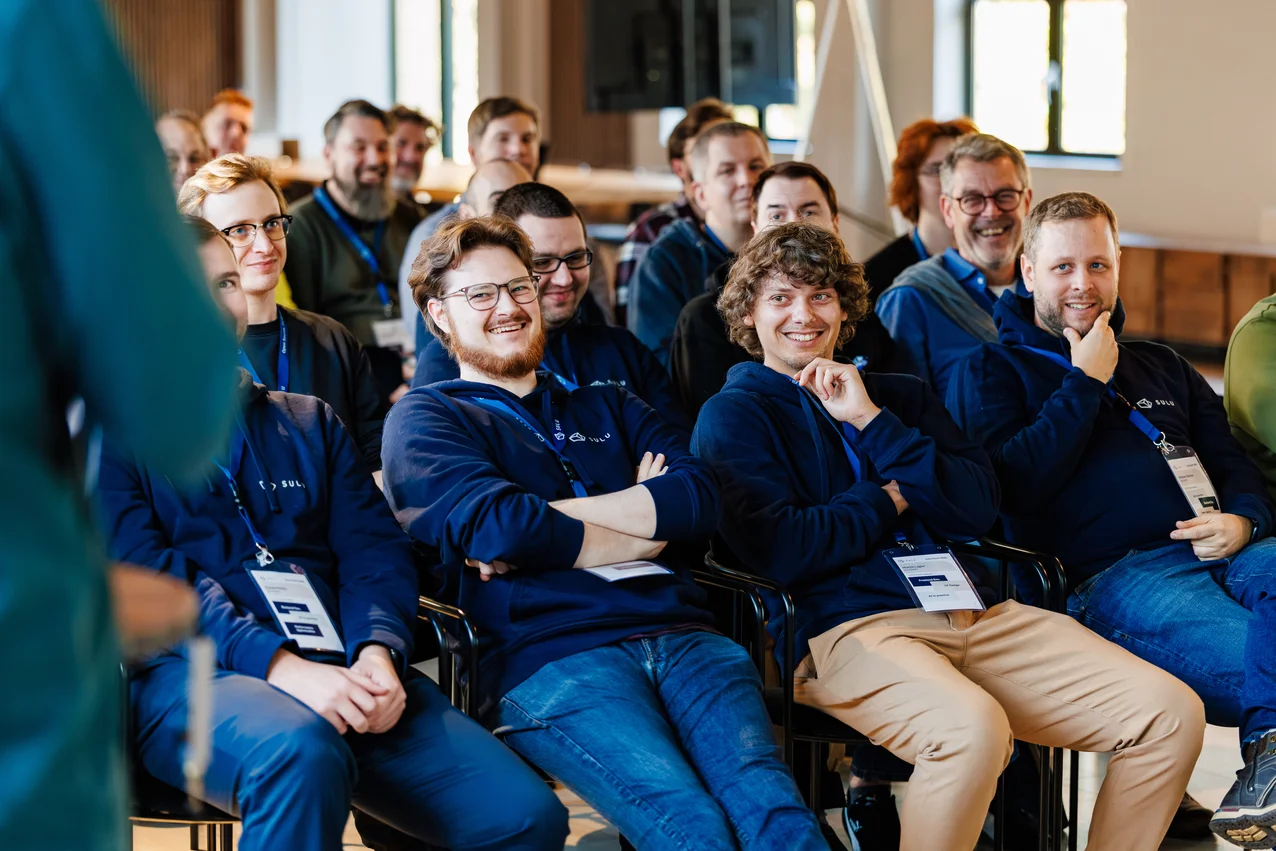
The energy in the room was exactly what I’d hoped for when our partners and friends gathered at Venue Collective on Wednesday, 26 November. These are the people who trust Sulu for their client projects, who contribute code and feedback, and who have stuck with us through the long road to Sulu 3.0. What we started in Vienna last year with the first ever Sulu:Touch is becoming an annual community tradition.
The morning sessions went deep into technical details. We talked about the new content repository architecture in Sulu 3.0, walked through the migration path, and had open conversations about different frontend stacks. Nobody made a sales pitch. Instead, everyone showed they wanted a real discussion about getting things right.
Alongside the technical track, we ran a business session on the Sulu roadmap and partner program. This yielded concrete plans: new formats to strengthen the exchange between partners in 2026 and fresh ideas on how to increase our reach through conferences and trade shows. These conversations matter just as much as the technical ones.
In the afternoon, Marcel Moosbrugger delivered a keynote that I think everyone needed. There’s so much noise around AI right now, and Marcel cut through it with practical guidance. He broke down what LLMs actually are: sophisticated heuristic companions that excel at pattern matching but lack reasoning or world models. His practical framework resonated: AI provides 10x speedup on pure pattern matching like boilerplate code, 2–3x on pattern combinations, but humans remain paramount for novel reasoning. Most valuable was his emphasis on context: His team maintains CLAUDE.md files documenting patterns and architecture decisions, treating context as equally important as code itself. Check out his slides.
And then came the moment we’d been working toward: Sulu 3.0.
Two years of development. Countless discussions about architecture decisions. That moment earlier this year when we had to be honest with ourselves and push the release date because we knew it wasn’t ready. It all culminated in hitting publish on 26 November.
Another milestone: We announced Sulu.cloud, our hosting solution powered by SymfonyCloud. Working with SymfonyCloud just makes sense. They understand Symfony projects inside-out. Infrastructure shouldn’t be a headache for agencies and developers. It should just work.
You can find the slides from our presentations here:
SymfonyCon 2025
The next two days at SymfonyCon were equally intense. The conference returned to Beurs van Berlage, the same venue as 2019, and this year carried extra significance: Symfony’s twentieth anniversary. Over 1,200 people gathered to celebrate two decades of a framework that has shaped how so many of us think about PHP development.
There’s something unique about meeting people in person. Faces I’ve only known from GitHub profiles and Slack avatars became real. I reconnected with old friends I hadn’t seen in years and met developers who just discovered Sulu and wanted to share how they’re using it.
Alex did an amazing job with his presentations. His talk on productive frontend stacks with Symfony UX made a compelling case that backend-rendered HTML is back—and that Twig, Turbo, Stimulus, and Tailwind can form a genuinely productive stack.
The AI buzz was everywhere. Multiple talks covered practical integrations, design patterns, and ethical considerations. The Symfony community is thinking seriously about how to build AI-powered features responsibly. It’s exactly the kind of thoughtful approach I’d expect from this ecosystem.
Looking back, looking forward
Weeks like this remind me why we do what we do. The late nights polishing the release. The difficult conversation about delaying 3.0 because we knew the final 20% needed more time. The constant balancing act between innovation and sustainability.
Sulu started as a project to solve content management challenges we faced ourselves. Somewhere along the way, it became something bigger. A community of developers and agencies who share our values about flexibility, quality, and doing things the right way.
Thank you to everyone who joined us at Sulu:Touch, attended Alex’s sessions, stopped by to chat, or simply followed along from around the world. You’re what makes this journey worthwhile.